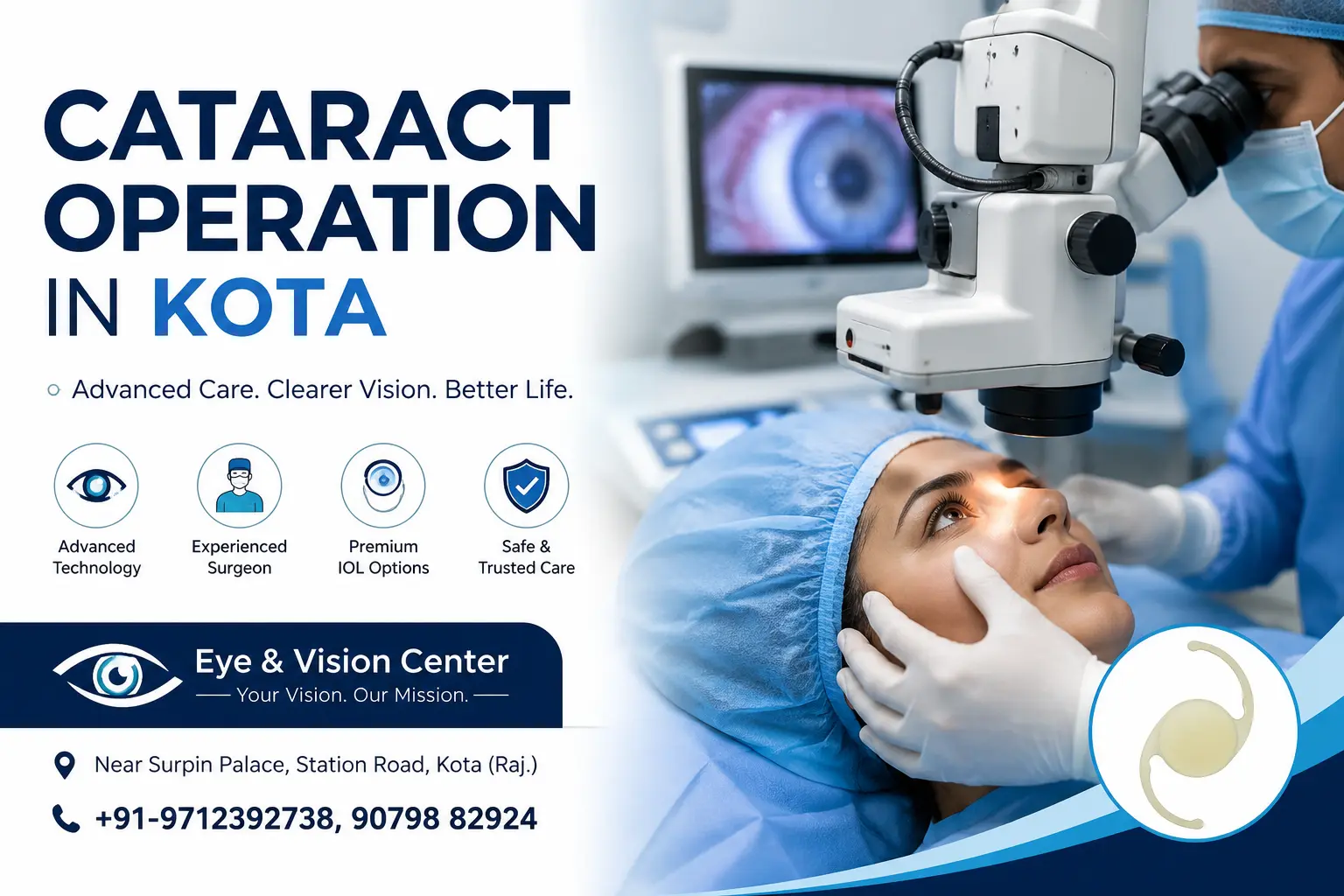
Cataract Operation in Kota: Cost, Procedure, Lens Options & Recovery Guide 2026
If you are searching for a cataract operation in Kota, it is important to understand the available surgical techniques, lens options, recovery process and factors that can affect treatment cost.
If blurred vision, cloudy eyesight, difficulty reading or trouble seeing clearly at night is affecting your daily life, cataract may be one of the possible causes. For patients searching for cataract operation in Kota, understanding the diagnosis, available surgical techniques, intraocular lens options, expected recovery and factors that affect treatment cost can make the decision easier.
Cataract occurs when the natural lens of the eye becomes cloudy, causing vision to become blurred or reduced. Cataracts are commonly associated with ageing, although they can also occur for other reasons. When cataract begins interfering with everyday activities, an ophthalmologist may recommend surgery after a detailed eye examination.
At Eye & Vision Center, Kota, Dr. Ankur Gupta provides cataract evaluation and modern cataract surgery based on the patient’s individual eye condition, visual requirements and lens suitability. The centre offers different surgical approaches and intraocular lens options following appropriate evaluation.
What Is a Cataract?
A cataract is the clouding of the natural lens inside the eye. The natural lens normally helps focus light onto the retina. When it becomes cloudy, light does not pass through the lens normally, which can affect the clarity and quality of vision.
Common symptoms of cataract may include:
- Blurred or cloudy vision
- Difficulty seeing clearly at night
- Increased sensitivity to bright lights
- Glare around headlights or other lights
- Difficulty reading or performing detailed tasks
- Colours appearing less bright
- Frequent changes in spectacle prescription
- Difficulty carrying out everyday activities because of reduced vision
Not everyone with an early cataract needs immediate surgery. The decision depends on the degree to which the cataract affects vision and daily activities, along with the findings of a professional eye examination.
When Is Cataract Surgery Recommended?
Cataract surgery is generally considered when the cataract is affecting your ability to perform normal activities such as reading, driving, working or watching television.
An ophthalmologist will first assess your eyes and determine whether the cataract is responsible for your visual symptoms. Other eye conditions, including retinal disease, glaucoma or corneal problems, may also affect vision, so a complete examination is important before deciding on surgery.
If you are considering a cataract operation in Kota, do not choose a procedure or lens only on the basis of price. Your eye condition, lifestyle, visual requirements and overall eye health should be evaluated first.
If you are considering a cataract operation in Kota, a comprehensive eye examination should be the first step before deciding on surgery.
Cataract Operation in Kota: What Happens During Surgery?
A cataract operation in Kota may involve different surgical techniques depending on the patient’s eye condition and the ophthalmologist’s recommendation.
Modern cataract surgery involves removing the cloudy natural lens and replacing it with an artificial intraocular lens, commonly called an IOL.
At Eye & Vision Center, the cataract surgery service includes modern micro-incision techniques. Depending on the patient’s condition and clinical requirements, the available approaches may include:
1. Phacoemulsification
Phacoemulsification uses a small incision and ultrasonic energy to break up the cloudy lens so that it can be removed. An artificial intraocular lens is then placed inside the eye.
It is one of the commonly used modern approaches to cataract surgery.
2. SICS – Small Incision Cataract Surgery
Small Incision Cataract Surgery is another established technique. It can be particularly useful in selected cases where the surgeon considers it appropriate.
The choice between different techniques depends on the cataract, the anatomy of the eye, available technology and the surgeon’s clinical assessment.
3. MICS – Micro-Incision Cataract Surgery
Micro-Incision Cataract Surgery uses a very small incision and is designed to minimise surgical disruption while providing effective cataract removal in suitable patients.
4. FLACS – Femtosecond Laser-Assisted Cataract Surgery
Laser-assisted cataract surgery uses femtosecond laser technology to assist with selected steps of the procedure. Whether this option is appropriate depends on the patient’s eye condition and the surgeon’s assessment.
The goal of cataract surgery is not simply to remove the cloudy lens. The removed lens is normally replaced with an artificial intraocular lens to restore useful vision.
How Long Does a Cataract Operation Take?
The actual surgical procedure can be relatively short, although the total time spent at the eye centre will also include pre-operative preparation and post-operative observation.
Eye & Vision Center states that its cataract procedures generally take around 20–30 minutes, with local anaesthesia and same-day discharge in appropriate cases.
Other reputable medical sources also describe cataract surgery as a relatively short procedure, with the NHS noting that the operation usually takes around 20–45 minutes.
The exact duration can vary according to the patient’s eye condition, surgical technique and individual circumstances.
Is Cataract Surgery Painful?
Cataract surgery is generally performed using local or topical anaesthesia to numb the eye. Patients are normally awake during the procedure but should not feel the surgical steps in the way they would during an operation without anaesthesia.
Some mild discomfort, watering, irritation or temporary blurring can occur after surgery while the eye recovers. Your surgeon will provide specific instructions regarding medicines and eye drops.
If you experience severe pain or rapidly worsening vision after surgery, contact your eye-care provider promptly because these symptoms require medical assessment.
Types of Lenses Used in Cataract Surgery
One of the most important decisions during cataract treatment is selecting an appropriate intraocular lens (IOL).
The lens is selected after evaluating your eye measurements, visual needs, existing eye conditions and lifestyle.
Monofocal Lens
A monofocal IOL is designed to provide clear vision at one primary distance, such as distance vision. You may still need glasses for some activities depending on the selected target and your individual result.
Multifocal or Trifocal Lens
Multifocal and trifocal lenses are designed to provide vision at more than one distance and may reduce dependence on spectacles for selected patients.
However, these lenses are not automatically suitable for everyone. Detailed evaluation is important before choosing them.
Premium IOLs
Premium lenses may offer additional optical features depending on the specific lens design. Your ophthalmologist can explain whether a premium IOL is appropriate for your eyes and what visual benefits and limitations should be expected.
There is no single “best lens” for every patient. The right IOL depends on your eye health, lifestyle, expectations, budget and visual requirements.
Cataract Operation Cost in Kota: What Determines the Price?
One of the most common questions patients have when searching for cataract operation in Kota is the cost.
The cost of a cataract operation in Kota can vary depending on the surgical technique, IOL selected, diagnostic tests and individual patient requirements.
It is important to understand that cataract surgery does not have one fixed price for every patient. The final cost can depend on several factors, including:
- Type of cataract surgery
- Type and brand of IOL
- Monofocal or premium lens selection
- Pre-operative diagnostic tests
- Complexity of the cataract
- Other existing eye conditions
- Medicines and post-operative care
- Follow-up requirements
- Technology and surgical facilities used
Eye & Vision Center describes its cataract services as offering budget-friendly treatment options. However, patients should discuss the exact procedure, IOL and total expected charges with the clinic before surgery rather than relying on a generic online price.
If you are comparing the cataract operation cost in Kota, compare what is included in the quoted package—not just the headline price.
What Tests Are Done Before Cataract Surgery?
Before cataract surgery, your ophthalmologist needs to assess the health and measurements of your eye.
Depending on your individual case, the evaluation may include:
- Visual acuity testing
- Refraction assessment
- Detailed examination of the eye
- Measurement of the eye for IOL selection
- Assessment of the cornea
- Examination of the retina when required
- Eye pressure assessment when indicated
- General health evaluation before surgery
These examinations help the surgeon determine whether cataract surgery is appropriate and assist in selecting the most suitable IOL.
The National Eye Institute notes that measurements of the size and shape of the eye help the eye doctor choose an appropriate artificial lens before cataract surgery.
How to Prepare for Cataract Surgery
Your ophthalmologist will give you personalised instructions before the procedure.
Common preparation may include:
- Complete the recommended eye examinations.
- Inform your doctor about all medicines you are taking.
- Use prescribed eye drops exactly as instructed.
- Follow any instructions regarding food and drink before surgery.
- Arrange for a family member or responsible person to accompany you if advised.
- Do not drive yourself home after the procedure.
- Carry your previous medical reports and current medication details if required.
Do not stop any regular medication unless your doctor specifically instructs you to do so.
What Happens After a Cataract Operation?
Most patients can return home on the same day after routine cataract surgery, provided the medical team considers it appropriate.
Immediately after surgery, your vision may not be perfectly clear. Temporary blurring, watering, mild irritation or light sensitivity can occur while the eye recovers.
Your doctor may prescribe eye drops and provide instructions for protecting the operated eye.
The NHS also notes that patients commonly go home on the day of cataract surgery and should not drive themselves home.
Cataract Surgery Recovery: What to Expect
Recovery varies from person to person.
Some patients notice an improvement in vision within hours or days, while complete visual stabilisation can take longer depending on individual healing and other eye conditions.
During recovery:
- Use prescribed eye drops as directed.
- Do not rub or press on the operated eye.
- Protect your eye as advised by your surgeon.
- Wear sunglasses if bright light feels uncomfortable.
- Avoid dusty or dirty environments.
- Avoid heavy lifting and strenuous activity until your doctor allows it.
- Attend all recommended follow-up appointments.
- Do not drive until your vision is sufficiently clear and your doctor considers it safe.
The NHS advises avoiding activities such as heavy lifting, swimming and eye rubbing during the recovery period and following the surgeon’s specific instructions.
When Can You Return to Normal Activities?
Many people recover relatively quickly after uncomplicated cataract surgery, but the timeline is different for every patient.
Light activities may often be resumed sooner than strenuous physical activities. Your occupation also matters. Someone working at a desk may have different requirements from someone performing heavy manual work.
Your ophthalmologist should determine when you can safely:
- Drive
- Return to work
- Exercise
- Lift heavy objects
- Swim
- Resume other demanding activities
Do not use another patient’s recovery timeline as your own medical instruction.
Is Cataract Surgery Safe?
Cataract surgery is considered a common and generally safe procedure, but no surgery is completely free of risk.
Possible complications can include:
- Infection
- Inflammation
- Bleeding
- Changes in eye pressure
- Retinal complications
- Problems involving the implanted lens
- Persistent or reduced vision
- Posterior capsule opacification, sometimes called a secondary cataract
Serious complications are uncommon, but patients should understand the potential risks before consenting to surgery.
If you notice severe pain, rapidly worsening vision, increasing redness, new flashes or a sudden increase in floaters after surgery, seek urgent medical advice.
Why Choose an Experienced Ophthalmologist for Cataract Treatment in Kota?
Choosing a cataract surgeon should involve more than looking for the lowest price.
Consider:
Experience and Specialisation
Look for an ophthalmologist with relevant experience in cataract surgery and the type of treatment you may require.
Detailed Eye Evaluation
A proper diagnosis should come before selecting a surgical technique or lens.
Appropriate Technology
Modern diagnostic and surgical technology can assist with accurate assessment and treatment, but technology should be selected according to the patient’s clinical needs.
Lens Selection
Your IOL should be selected according to your eye measurements, eye health, lifestyle and visual expectations.
Post-Operative Care
Follow-up and aftercare are important parts of cataract treatment. Ask your surgeon about the expected follow-up schedule and what symptoms should prompt you to contact the clinic.
Cataract Operation in Kota at Eye & Vision Center
At Eye & Vision Center, Kota, Dr. Ankur Gupta is a Specialist Ophthalmologist with 10 years of experience in ophthalmology services and specialises in cataract, cornea and refractive surgery.
The centre provides comprehensive eye evaluation and cataract treatment based on individual patient requirements. Cataract services include modern surgical techniques, IOL options and post-operative care.
The clinic is located near Surpin Palace, Station Road, Kota, Rajasthan.
For appointment and treatment information, patients can contact the clinic directly and discuss their cataract condition, recommended procedure, lens options and expected cost.
You can also learn more about the clinic’s dedicated cataract service here:
Cataract Surgery Services
For broader information about the ophthalmologist and available eye-care services:
Frequently Asked Questions About Cataract Operation in Kota
1. What is a cataract operation?
A cataract operation is a surgical procedure in which the cloudy natural lens of the eye is removed and replaced with an artificial intraocular lens (IOL).
2. Is cataract operation available in Kota?
Yes. Cataract evaluation and surgery are available at Eye & Vision Center in Kota. The appropriate procedure and IOL are determined after an eye examination.
3. What is the cost of cataract operation in Kota?
The cost varies depending on the surgical technique, IOL type, diagnostic evaluation and individual patient requirements. It is best to obtain a personalised estimate after consultation rather than relying on a single advertised price.
4. Which cataract lens is best?
There is no universally best cataract lens. Monofocal, multifocal, trifocal and other premium IOLs may be suitable for different patients. Your ophthalmologist should recommend a lens based on your eye health, measurements, lifestyle and visual needs.
5. How long does cataract surgery take?
The surgical procedure is usually relatively short. Eye & Vision Center states that its cataract procedures generally take around 20–30 minutes, although total time at the centre can be longer because of preparation and observation.
6. Can cataract surgery be done without stitches?
Some modern cataract techniques use small incisions and may not require conventional stitches. The technique depends on the patient’s eye condition and the surgeon’s assessment.
7. Can I go home on the same day after cataract surgery?
Routine cataract surgery is commonly performed as a day-care procedure. Eye & Vision Center states that patients can return home the same day when medically appropriate.
8. How quickly does vision improve after cataract surgery?
Vision may begin improving within hours or days, but recovery varies. Temporary blurring can occur during the early recovery period, and visual stabilisation may take longer depending on individual healing and other eye conditions.
9. Can cataract come back after surgery?
The original cataract does not grow back because the cloudy natural lens has been removed. However, some patients can later develop posterior capsule opacification, sometimes called a secondary cataract, which can be treated with a laser procedure when appropriate.
10. Should I get cataract surgery immediately?
Not necessarily. The timing of surgery depends on how much the cataract is affecting your vision and daily activities, along with your overall eye health. Your ophthalmologist can help you decide when surgery is appropriate.
Book a Cataract Consultation in Kota
If cataract is affecting your daily activities or your vision has become cloudy or blurred, a comprehensive eye examination can help determine the cause of your symptoms and whether cataract surgery is appropriate.
At Eye & Vision Center, Kota, Dr. Ankur Gupta provides cataract evaluation and surgical care based on individual patient requirements.
Eye & Vision Center, Kota
Near Surpin Palace, Station Road, Kota, Rajasthan
Phone: +91-9712392738, 90798 82924
Your cataract treatment should begin with the right diagnosis, the right surgical approach and an IOL selected for your individual visual needs.
Trusted Medical Resources
For additional patient education about cataracts and cataract surgery:
- National Eye Institute – Cataract Surgery
- National Eye Institute – Cataracts
- NHS – Cataract Surgery
Medical Disclaimer: This article is intended for general educational purposes and should not replace an examination or personalised medical advice from a qualified ophthalmologist. Cataract surgery, lens selection and recovery can vary from patient to patient.